
Introduction
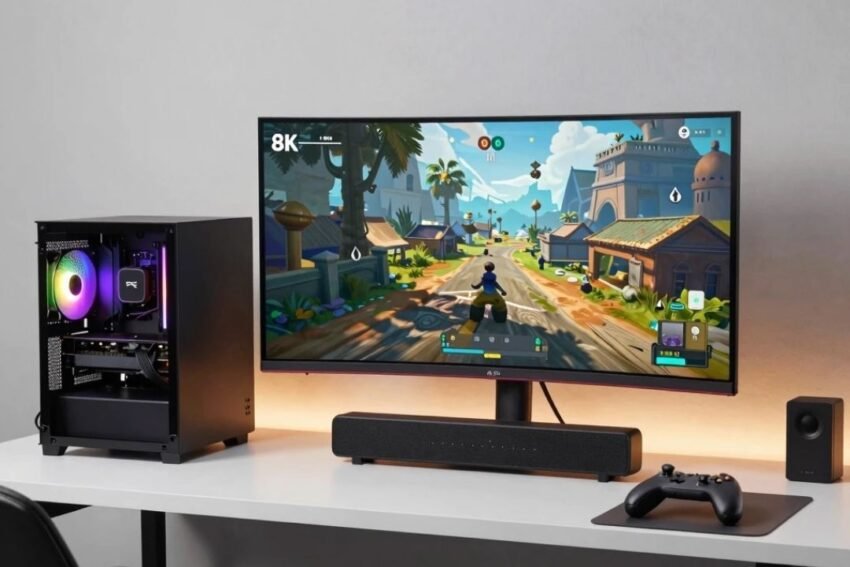
Gaming technology is advancing faster than ever, giving players access to powerful hardware, intelligent software, advanced graphics, artificial intelligence, immersive displays, and connected gaming platforms. In 2026, gaming is no longer limited to traditional consoles and desktop computers. Players can enjoy demanding games on PCs, consoles, handheld devices, smartphones, virtual reality systems, and cloud platforms.
The best gaming technology in 2026 combines performance, visual quality, responsiveness, portability, connectivity, and immersive features. Gaming PCs are becoming more powerful, handheld devices are offering console-like experiences, and AI is changing both game development and gameplay.
This article explores the best gaming technology in 2026, including gaming hardware, software, AI, graphics, displays, VR, cloud gaming, handhelds, networking, and next-generation gaming trends.
What Is Next-Generation Gaming Technology?
Next-generation gaming technology refers to new hardware and software designed to deliver improved gaming performance and experiences.
It includes:
- Powerful CPUs and GPUs
- High-speed SSD storage
- Advanced gaming displays
- AI-assisted graphics
- Cloud gaming
- Virtual reality
- Augmented reality
- AI-powered gameplay
- High-speed networking
- Advanced controllers
- Portable gaming systems
These technologies work together to make games faster, more detailed, immersive, and accessible.
Best Gaming Technology Trends in 2026
1. Powerful Gaming PCs
Gaming PCs remain one of the most flexible platforms for serious gamers.
A modern gaming PC can provide:
- High frame rates
- High-resolution gaming
- Advanced graphics
- Upgradeability
- Custom cooling
- Large storage capacity
- Support for multiple displays
PC gaming is particularly attractive to players who want control over graphical settings and hardware upgrades.
2. Advanced Gaming GPUs
The graphics processing unit is one of the most important components in a gaming system.
Modern GPUs are designed to handle demanding graphical workloads, including:
- High-resolution rendering
- Ray tracing
- AI-assisted graphics
- Complex lighting
- Advanced visual effects
A powerful GPU can help gamers achieve better image quality and smoother performance.
3. High-Performance CPUs
The CPU handles many important game processes.
A modern gaming processor can help manage:
- Game logic
- Physics
- AI calculations
- Background processes
- Multiplayer systems
A balanced CPU and GPU combination is important for consistent performance.
4. High-Speed SSD Storage
Solid-state drives have become an essential part of modern gaming.
Compared with older mechanical storage, SSDs can provide faster data access and reduce loading times.
Fast storage can improve:
- Game loading
- Asset streaming
- Installation
- System responsiveness
Large open-world games can particularly benefit from high-speed storage.
5. AI-Assisted Graphics
Artificial intelligence is becoming increasingly important in gaming graphics.
AI-assisted rendering can help improve image quality while reducing some of the workload required for native rendering.
This can help gamers achieve a balance between:
- Resolution
- Image quality
- Frame rate
- Hardware performance
6. Ray Tracing
Ray tracing simulates the behavior of light to create more realistic visual effects.
It can improve:
- Reflections
- Shadows
- Lighting
- Global illumination
Ray tracing can make game environments more visually impressive, although it can require significant graphics performance.
7. High-Refresh-Rate Gaming Monitors
A high-refresh-rate monitor can provide smoother motion and more responsive visuals.
Refresh rates such as 144Hz and above are popular among competitive gamers when paired with hardware capable of producing high frame rates.
Other important monitor features include:
- Low response time
- High resolution
- HDR
- Adaptive synchronization
- OLED technology
8. OLED Gaming Displays
OLED displays are known for deep blacks, strong contrast, and fast response.
For gaming, OLED technology can provide:
- Excellent image quality
- High contrast
- Fast response
- Immersive visuals
OLED monitors and televisions are especially appealing to gamers who prioritize cinematic graphics.
9. Gaming Consoles
Consoles remain an important part of the gaming industry.
Their major advantages include:
- Simple setup
- Optimized hardware
- Dedicated game libraries
- Controller-focused experiences
- Living-room gaming
Modern consoles can provide high-quality graphics and fast loading while offering a straightforward gaming experience.
10. Powerful Gaming Handhelds
Gaming handhelds are becoming increasingly capable.
Modern portable systems can provide:
- Powerful processors
- High-quality displays
- Fast storage
- Wireless connectivity
- Advanced graphics
Handheld gaming gives players greater flexibility by allowing them to enjoy demanding games away from a traditional gaming setup.
11. Gaming Smartphones
Smartphones have become an important gaming platform.
Gaming-focused smartphones may include:
- High-refresh-rate displays
- Powerful processors
- Advanced cooling
- Large batteries
- Gaming-focused software
- Responsive touch controls
Mobile gaming also benefits from improvements in cloud gaming and faster networks.
12. Virtual Reality Headsets
Virtual reality technology creates immersive digital environments.
VR systems can combine:
- Head-mounted displays
- Motion tracking
- Controllers
- Spatial audio
VR gaming is particularly useful for immersive adventure, simulation, fitness, exploration, and interactive experiences.
13. Augmented Reality
Augmented reality places digital elements into physical environments.
Future AR gaming can include:
- Location-based experiences
- Interactive environments
- Educational games
- Fitness applications
- Social gaming
AR can transform physical spaces into interactive gaming environments.
14. Mixed Reality
Mixed reality combines real-world spaces with digital objects.
It can allow virtual elements to interact with physical environments.
This creates possibilities for new game genres that go beyond traditional screens.
15. Artificial Intelligence in Gameplay
AI is influencing how games behave.
AI systems can be used for:
- NPC behavior
- Enemy reactions
- Dynamic difficulty
- Game testing
- Player personalization
Smarter AI can help make game worlds feel more responsive.
16. AI-Powered NPCs
NPCs can become more dynamic when powered by advanced AI systems.
Future NPCs may respond more naturally to:
- Player decisions
- Game events
- Dialogue
- Environmental changes
This could make characters feel less predictable and more interactive.
17. Generative AI for Game Development
Generative AI can assist developers with various tasks.
Potential applications include:
- Code assistance
- Concept development
- Dialogue drafts
- Asset prototyping
- Testing
- Content experimentation
AI can reduce repetitive workloads, but human developers remain important for creative direction and quality control.
18. Cloud Gaming
Cloud gaming allows games to run on remote servers and stream to compatible devices.
Potential benefits include:
- Reduced hardware requirements
- Flexible access
- Cross-device gaming
- Reduced installation requirements
Cloud gaming depends on strong network connectivity and low latency.
19. 5G and Low-Latency Networks
Fast networks can improve connected gaming.
They are particularly useful for:
- Cloud gaming
- Mobile gaming
- Multiplayer games
- Streaming
- Remote gaming
Lower latency can make online gaming feel more responsive.
20. Advanced Gaming Controllers
Controllers are becoming increasingly sophisticated.
Modern controllers can include:
- Haptic feedback
- Adaptive triggers
- Motion sensors
- Custom buttons
- Wireless connectivity
These features can improve immersion and responsiveness.
21. Haptic Technology
Haptics provide physical feedback to players.
Advanced haptic systems can simulate:
- Impacts
- Vibrations
- Environmental effects
- Resistance
- Movement
This can create a stronger connection between player actions and on-screen events.
22. Spatial Gaming Audio
Gaming audio is becoming more immersive.
Spatial audio technologies can help players identify where sounds originate.
This is particularly useful in:
- Competitive shooters
- Horror games
- VR
- Open-world games
Accurate audio positioning can improve both immersion and situational awareness.
23. Cross-Platform Gaming
Cross-platform technology allows players on supported systems to play together.
This can connect gamers across:
- PCs
- Consoles
- Smartphones
- Handheld devices
Cross-platform ecosystems can make multiplayer communities larger and more flexible.
24. Gaming Accessibility
Modern gaming technology increasingly focuses on accessibility.
Useful features can include:
- Remappable controls
- Custom input systems
- Subtitles
- Color adjustments
- Audio descriptions
- Assistive controllers
- Adjustable difficulty
Accessibility can help more players enjoy games.
25. Game Engines
Game engines provide the foundation for modern game development.
They support:
- Rendering
- Physics
- Animation
- Audio
- AI
- Networking
Advanced engines allow developers to build increasingly complex game worlds.
26. Procedural Generation
Procedural generation uses algorithms to create game content.
It can generate:
- Worlds
- Levels
- Environments
- Items
- Missions
This can help developers create large and varied experiences.
27. Real-Time Analytics
Game developers can use analytics to understand how players interact with games.
Data can help identify:
- Popular features
- Player progression
- Difficulty problems
- Technical issues
- Engagement patterns
Analytics can support game balancing and future development decisions.
28. Esports Technology
Esports requires highly responsive technology.
Competitive players often prioritize:
- High frame rates
- High-refresh-rate monitors
- Low latency
- Responsive peripherals
- Stable internet
Technology plays a critical role in professional competitive gaming.
29. Gaming Cybersecurity
Gaming platforms need strong security because they can contain personal and financial information.
Important security measures include:
- Strong passwords
- Multi-factor authentication
- Software updates
- Account monitoring
- Secure payment systems
Players should also be cautious of phishing messages and suspicious links.
30. Anti-Cheat Technology
Fair competition requires effective anti-cheat systems.
Developers can use:
- Server-side detection
- Behavioral analysis
- Software monitoring
- Automated systems
Anti-cheat technology helps maintain fair online environments.
Best Gaming Technology for Different Players
Best for Competitive Gamers
Competitive players should prioritize:
- High-refresh-rate displays
- Low latency
- High frame rates
- Responsive mice and keyboards
- Stable internet
Best for Casual Gamers
Casual players may prefer:
- Easy-to-use consoles
- Affordable gaming PCs
- Smartphones
- Handheld devices
Best for Immersive Gaming
Players who want maximum immersion can consider:
- VR headsets
- OLED displays
- Spatial audio
- Haptic controllers
Best for Portable Gaming
Portable players can consider:
- Gaming handhelds
- Gaming laptops
- Gaming smartphones
- Cloud gaming
Benefits of Modern Gaming Technology
Better Performance
Modern processors, GPUs, and storage systems can provide smoother gaming.
Improved Graphics
Advanced rendering can create more realistic environments.
Greater Immersion
VR, haptics, spatial audio, and advanced displays can make gaming more engaging.
More Flexibility
Cloud gaming and portable systems provide additional ways to play.
Better Accessibility
Custom controls and accessibility features can expand the gaming audience.
Smarter Gameplay
AI can make NPCs and game environments more responsive.
Challenges of Gaming Technology
Cost
High-performance gaming hardware can be expensive.
Complexity
Advanced systems may require technical knowledge.
Internet Dependence
Online and cloud gaming require reliable connections.
Privacy
Connected platforms may collect player information.
Security
Gaming accounts can be targeted by cybercriminals.
Hardware Requirements
The latest games may require powerful hardware for maximum settings.
How to Choose the Best Gaming Technology in 2026
Before purchasing gaming technology, consider your needs.
Step 1: Identify Your Games
Determine whether you mainly play competitive, RPG, strategy, sports, simulation, VR, or mobile games.
Step 2: Set a Budget
Decide how much you can comfortably spend.
Step 3: Choose a Platform
Consider PC, console, handheld, smartphone, or cloud gaming.
Step 4: Consider Performance
Look at the CPU, GPU, RAM, storage, display, and cooling system.
Step 5: Consider Your Display
Choose the resolution and refresh rate that match your gaming preferences.
Step 6: Think About Future Upgrades
PCs and some accessories can be upgraded over time.
Future of Gaming Technology
The gaming industry is likely to continue evolving rapidly.
Future developments may include:
- Smarter AI characters
- More realistic virtual worlds
- Better VR and AR systems
- Faster cloud gaming
- More powerful handhelds
- Advanced haptics
- AI-assisted game development
- More personalized gaming
- Improved accessibility
- More efficient gaming hardware
The combination of these technologies could create gaming experiences that are significantly more interactive than traditional games.
Frequently Asked Questions
What is the best gaming technology in 2026?
The best gaming technology depends on individual needs. High-performance PCs, modern consoles, handheld systems, advanced displays, AI technologies, VR, and cloud gaming all serve different gaming preferences.
Is AI important for gaming?
Yes. AI can support game development, NPC behavior, testing, personalization, and graphics technologies.
Are gaming handhelds worth considering?
Handhelds can be a strong choice for players who value portability while still wanting access to demanding games.
Is VR the future of gaming?
VR is an important part of gaming’s future, particularly for immersive experiences, although traditional gaming platforms will remain important.
Why are OLED displays popular for gaming?
OLED displays offer strong contrast, deep blacks, fast response, and excellent image quality.
Is cloud gaming reliable?
Cloud gaming can be convenient, but the experience depends on internet speed, latency, server availability, and the quality of the service.
Conclusion
The best gaming technology in 2026 combines powerful hardware, advanced software, artificial intelligence, immersive displays, fast networking, and innovative gaming platforms. From high-performance gaming PCs and consoles to handheld systems and gaming smartphones, players now have more choices than ever.
AI is becoming one of the most influential technologies in gaming. It can assist developers, improve NPC behavior, support testing, and contribute to personalized experiences. Advanced graphics technologies such as ray tracing and AI-assisted rendering are also helping create more realistic virtual worlds.
VR, AR, mixed reality, haptic feedback, spatial audio, and advanced displays are improving immersion, while cloud gaming and faster networks are creating more flexible ways to access games.
There is no single best gaming technology for everyone. Competitive gamers may prioritize low latency and high refresh rates, while immersive gamers may prefer VR, OLED displays, and advanced audio. Portable gamers may choose handheld systems or gaming smartphones.
The future of gaming will likely combine AI, powerful hardware, cloud technology, immersive interfaces, advanced graphics, and intelligent software.
As these technologies continue to develop, gaming will become increasingly sophisticated, personalized, accessible, and interactive, creating exciting opportunities for players, developers, creators, and the broader gaming industry.