
Introduction
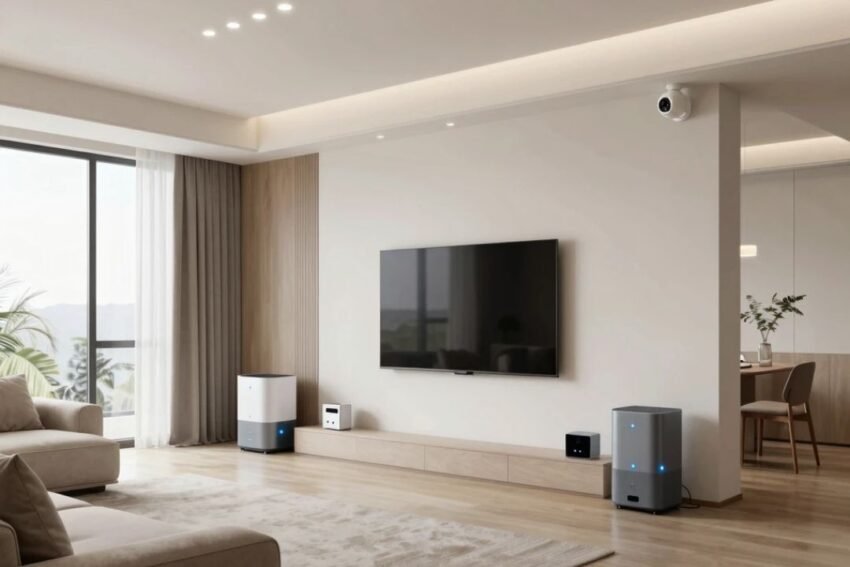
The future of smart home technology is moving rapidly toward intelligent automation, artificial intelligence, connected devices, advanced sensors, energy management, and seamless digital experiences. What began with simple smart bulbs and connected speakers is evolving into complete ecosystems where lighting, security, appliances, climate control, entertainment, and energy systems can work together.
The Internet of Things (IoT) is at the heart of this transformation. IoT allows physical devices to connect to networks, exchange information, and respond to commands or environmental changes. When IoT is combined with artificial intelligence and automation, homes can become more responsive and personalized.
In 2026, the smart-home industry is increasingly focused on creating technology that does more than simply connect to the internet. The goal is to build homes that can understand patterns, automate tasks, improve energy efficiency, strengthen security, and adapt to individual preferences.
This article explores the future of Smart Home & IoT, including the most important innovations, benefits, challenges, applications, and trends shaping modern living.
What Is Smart Home & IoT?
A smart home is a residence equipped with connected devices that can be monitored, controlled, or automated.
The Internet of Things connects these physical devices to networks and allows them to exchange information.
Examples include:
- Smart lights
- Smart thermostats
- Security cameras
- Smart locks
- Video doorbells
- Smart appliances
- Motion sensors
- Smart plugs
- Energy monitors
- Smart speakers
- Robot vacuums
The real power of IoT comes from connecting multiple devices into one coordinated ecosystem.
How Smart Homes Are Changing
Traditional homes require people to manually control most systems.
Smart homes can automate many activities.
For example:
Motion detected → compatible lights turn on
Home becomes unoccupied → selected devices adjust
Door activity detected → security notification appears
Temperature changes → thermostat responds
Leak detected → homeowner receives an alert
This transition from manual control to automation is one of the most important developments in smart-home technology.
The Future of Smart Home & IoT
1. Artificial Intelligence Will Become More Important
Artificial intelligence is expected to play a central role in the future of smart homes.
Traditional automation depends on fixed rules. AI can analyze patterns and potentially make more adaptive decisions.
AI-powered systems may analyze:
- Household routines
- Occupancy
- Temperature
- Energy consumption
- Lighting preferences
- Device usage
This could allow homes to become more responsive without requiring constant manual commands.
2. Predictive Home Automation
Future smart homes may move from reactive automation to predictive automation.
A traditional system might turn on a light after detecting motion.
A predictive system could potentially recognize patterns and prepare the environment before the user enters a room.
This could influence:
- Lighting
- Temperature
- Entertainment
- Security
- Energy management
The goal is to make automation feel natural rather than complicated.
3. AI-Powered Voice Assistants
Voice control is expected to become more conversational.
Instead of using rigid commands, users may increasingly interact with smart-home systems using natural language.
For example, a user could ask a compatible system to create a comfortable evening environment, and the system could coordinate supported lighting, climate, and entertainment devices.
AI can potentially make these interactions more contextual and personalized.
4. Smarter Home Security
Security will remain one of the strongest applications of IoT.
Future systems may combine:
- Cameras
- Motion sensors
- Door sensors
- Smart locks
- Video doorbells
- Alarm systems
AI-assisted systems may help analyze activity and provide more relevant alerts.
This could reduce unnecessary notifications while helping homeowners understand what is happening around their properties.
5. Advanced AI Security Cameras
Smart cameras are becoming increasingly sophisticated.
Future systems may provide improved capabilities for recognizing and classifying activity.
Potential features include:
- Motion detection
- Person detection
- Activity alerts
- Night vision
- Two-way communication
- Local processing
- Automated monitoring
Privacy will remain an important consideration, especially for cameras installed inside homes.
6. Smarter Access Control
Smart locks are likely to become more integrated with broader home-security systems.
Future access systems may combine:
- Smartphones
- Digital credentials
- PIN codes
- Biometrics
- Temporary access
- Security alerts
Instead of treating the lock as an independent device, the home may use access information as part of a larger security ecosystem.
7. Matter and Greater Interoperability
One of the biggest challenges in smart homes has been compatibility.
Different manufacturers and platforms have historically created fragmented ecosystems.
Industry standards such as Matter are designed to improve interoperability among supported devices.
Greater interoperability could allow consumers to combine compatible products from different manufacturers more easily.
8. Thread-Based Smart Home Networks
Thread is another important technology for connected homes.
It is designed for low-power devices and supports mesh networking.
Compatible products can include:
- Sensors
- Lights
- Locks
- Thermostats
As smart homes expand, efficient device-to-device communication will become increasingly important.
9. Edge Computing
Edge computing processes information closer to where it is generated.
Instead of sending every piece of information to a remote cloud server, some compatible systems can perform processing locally.
Potential benefits include:
- Faster response times
- Lower latency
- Reduced cloud dependence
- Potential privacy improvements
- Greater local reliability
Edge computing could become increasingly important for security systems, automation, and AI.
10. Local AI in Smart Homes
Local AI processing could allow compatible devices to perform certain intelligent tasks without relying entirely on cloud services.
This can potentially improve:
- Response times
- Privacy
- Reliability
- Offline functionality
The exact capabilities will depend on the hardware and software used by each ecosystem.
11. Smart Energy Management
Energy management will be a major part of future smart homes.
Connected systems can monitor electricity usage and provide information about household consumption.
Future systems may coordinate:
- Thermostats
- Smart appliances
- Solar panels
- Batteries
- Electric vehicles
- Energy monitors
This could help households make better decisions about when and how energy is consumed.
12. Smart Solar Integration
Homes with solar panels can use IoT systems to monitor energy generation.
Connected systems can provide information about:
- Solar production
- Household demand
- Battery storage
- Energy flows
Automation could help coordinate compatible appliances and energy storage with available electricity.
13. Home Battery Integration
Battery storage can become another important component of connected energy ecosystems.
A smart energy platform can monitor battery status and household consumption.
Future automation may coordinate energy storage with other household systems based on user preferences and available energy.
14. Electric Vehicle Integration
Electric vehicles can become part of the connected home.
A future ecosystem could connect:
- EV charging
- Home energy systems
- Solar generation
- Battery storage
- Electricity consumption
This could turn the home into a more integrated energy environment.
15. Smart Appliances
Connected appliances are expected to become increasingly intelligent.
Future appliances may provide better:
- Monitoring
- Automation
- Energy management
- Maintenance alerts
- Remote controls
Examples include:
- Refrigerators
- Ovens
- Washing machines
- Dishwashers
- Coffee makers
The most valuable appliances will likely be those that provide practical benefits rather than simply adding connectivity.
16. Predictive Maintenance
IoT sensors can potentially monitor equipment and identify unusual behavior.
For example, connected appliances may detect patterns that suggest maintenance could be needed.
Predictive maintenance can potentially reduce unexpected failures and help homeowners address issues earlier.
17. Smart Water Management
IoT will increasingly support water conservation.
Connected systems can monitor:
- Leaks
- Water usage
- Irrigation
- Pipes
- Outdoor watering
Smart irrigation systems may combine sensors and environmental information to reduce unnecessary watering.
18. Indoor Air Quality Technology
Environmental monitoring is likely to become a more important part of connected homes.
Smart sensors can monitor factors such as:
- Temperature
- Humidity
- Carbon dioxide
- Particulate matter
- Other air-quality indicators
Connected systems can provide alerts when conditions change.
19. Smart Lighting
Lighting will remain a major part of home automation.
Future systems may combine:
- Motion sensors
- Occupancy information
- Time schedules
- Ambient light
- User preferences
This could create more adaptive lighting environments.
20. Smart Windows and Shades
Motorized blinds and shades can become part of broader automation systems.
They can potentially respond to:
- Time
- Sunlight
- Temperature
- Occupancy
Automated window coverings can also work alongside lighting and climate systems.
21. Home Robotics
Robotics could become one of the most exciting areas of future smart homes.
Current home robots already perform tasks such as floor cleaning.
Future systems may become more capable of:
- Cleaning
- Monitoring
- Lawn maintenance
- Household assistance
- Device interaction
The combination of robotics and AI could create more flexible home assistants.
22. Smart Entertainment
Entertainment systems will become more integrated with home automation.
Connected systems can coordinate:
- TVs
- Speakers
- Streaming devices
- Gaming systems
- Lighting
A single routine could potentially prepare a complete environment for movies, music, or gaming.
23. Immersive Smart Homes
Future homes could integrate connected devices with immersive technologies.
Virtual and augmented reality could interact with smart environments for:
- Entertainment
- Education
- Fitness
- Gaming
- Visualization
This could create new experiences that connect digital content with physical spaces.
24. Personalized Home Experiences
AI can potentially personalize different parts of the home.
Different users may have different preferences for:
- Lighting
- Temperature
- Music
- Entertainment
- Daily routines
Future systems may recognize preferences and automatically adjust compatible devices.
25. Smart Homes for Accessibility
Automation can make certain household activities easier.
Useful technologies can include:
- Voice control
- Automated lighting
- Smart locks
- Remote controls
- Sensors
- Custom routines
As smart-home systems improve, accessibility may become an increasingly important part of product design.
26. Privacy-Focused Smart Homes
Privacy will be a major concern as homes become more connected.
Smart devices can potentially collect information about:
- Occupancy
- Movement
- Voice interactions
- Device usage
- Environmental conditions
Future smart-home systems may place greater emphasis on local processing, user controls, data minimization, and transparent privacy settings.
27. Stronger IoT Cybersecurity
Security will become increasingly important as more devices become connected.
Future IoT security may focus on:
- Strong authentication
- Multi-factor authentication
- Secure communications
- Software updates
- Device identity
- Access controls
- Local processing
Manufacturers will need to treat security as an essential product feature rather than an optional addition.
28. Sustainable Smart Homes
Smart-home technology can contribute to more efficient resource use.
Connected systems can help monitor:
- Electricity
- Water
- Heating
- Cooling
- Lighting
Automation can reduce unnecessary consumption by adjusting compatible devices according to schedules, occupancy, or environmental conditions.
29. Smart Home Data Analytics
Connected devices generate large amounts of information.
Data analytics can help homeowners understand patterns involving:
- Energy
- Temperature
- Device usage
- Occupancy
- Water
Better analytics can help users identify inefficiencies and make informed decisions.
30. Fully Integrated Home Ecosystems
The ultimate goal of Smart Home & IoT is integration.
Instead of having dozens of independent devices, future homes may use connected ecosystems that coordinate:
- Security
- Climate
- Lighting
- Energy
- Appliances
- Entertainment
- Access
- Robotics
The more effectively these systems communicate, the more valuable automation becomes.
Benefits of Future Smart Home Technology
Greater Convenience
Automation can reduce repetitive tasks.
Improved Energy Management
Connected systems can provide better visibility and control over resource consumption.
Enhanced Security
Integrated cameras, sensors, locks, and alarms can provide more comprehensive monitoring.
Better Comfort
AI-powered automation can personalize compatible environmental settings.
Remote Monitoring
Homeowners can monitor connected systems while away.
Improved Accessibility
Voice control and automation can simplify certain tasks.
Greater Personalization
AI can potentially adapt environments to user preferences.
Challenges of Future Smart Homes
Despite their advantages, connected homes face several challenges.
Privacy
More connected devices can mean more household data is generated and processed.
Security
Every connected device can create another potential security concern.
Compatibility
Consumers may still encounter limitations between different platforms and products.
Cost
Advanced AI, robotics, energy systems, and security equipment can be expensive.
Complexity
Large ecosystems can be difficult to configure and manage.
Reliability
Smart-home systems need dependable connectivity and software.
How to Prepare for the Future of Smart Home & IoT
Homeowners can prepare by building their systems gradually.
Choose Compatible Devices
Check whether products work with your preferred ecosystem and relevant standards.
Prioritize Security
Use strong passwords, multi-factor authentication, secure networks, and regular updates.
Focus on Practical Benefits
Buy devices that solve real problems rather than adding unnecessary complexity.
Consider Energy Management
Smart thermostats, energy monitors, and connected appliances can help improve awareness of consumption.
Plan for Expansion
Choose an ecosystem that can support your future needs.
Future Smart Home Use Cases
Intelligent Morning Routine
A connected system could coordinate compatible lighting, climate, and entertainment settings.
Automated Security
Sensors and cameras could work together to monitor selected areas and provide relevant alerts.
Energy Optimization
A smart energy system could coordinate compatible appliances, solar generation, batteries, and EV charging.
Automated Cleaning
Robotic devices could handle selected cleaning tasks according to schedules and environmental conditions.
Personalized Entertainment
A single routine could prepare lighting, audio, and entertainment systems for a preferred activity.
Frequently Asked Questions
What is the future of Smart Home & IoT?
The future is expected to focus on AI-powered automation, greater interoperability, energy management, robotics, stronger cybersecurity, local processing, and personalized experiences.
Will AI control smart homes?
AI is likely to play an increasingly important role in managing compatible devices, understanding natural-language requests, analyzing patterns, and supporting automation.
Will smart homes become fully automated?
Some household functions may become highly automated, but users will still need control over preferences, privacy, security, and important decisions.
What role will IoT play in future homes?
IoT will connect devices, sensors, appliances, energy systems, and security technologies so they can communicate and work together.
Are smart homes secure?
They can be secure when properly configured and maintained. Strong authentication, secure networks, software updates, and good privacy practices are essential.
Will smart homes save energy?
Connected thermostats, lighting, appliances, energy monitors, solar systems, and batteries can help users monitor and manage energy consumption.
Conclusion
The future of Smart Home & IoT is moving toward intelligent, connected, automated, and personalized living environments. Artificial intelligence is becoming a major driver of this transformation, while IoT provides the connectivity needed for devices, sensors, appliances, security systems, and energy technologies to communicate.
Future smart homes are likely to become less dependent on manual control. Predictive automation could allow compatible systems to recognize patterns and respond to household conditions. AI-powered voice interfaces may make interactions more natural, while edge computing and local AI could provide faster responses and potential privacy advantages.
Security and privacy will remain critical. As homes become more connected, homeowners will need to pay close attention to passwords, authentication, software updates, network security, and data practices.
Energy management is another major opportunity. Smart homes may increasingly connect thermostats, appliances, solar panels, batteries, electric vehicles, and energy monitors into integrated systems designed to provide greater visibility and control.
Robotics could also transform household tasks. As AI and robotics improve, home robots may become more capable of cleaning, monitoring, and interacting with other connected systems.
Ultimately, the future of smart-home technology is not about owning the largest number of gadgets. It is about creating an ecosystem where useful devices communicate intelligently, automate repetitive tasks, improve efficiency, and adapt to household needs.
As AI, IoT, connectivity, robotics, cybersecurity, and energy technologies continue to develop, smart homes will become increasingly integrated into everyday life. The connected home of the future could be more convenient, efficient, secure, accessible, and personalized than ever before.