
Introduction
Smart home technology is rapidly changing the way people live, work, and manage their homes. Internet of Things (IoT) devices have moved beyond basic smart lights and speakers to include intelligent security systems, connected appliances, energy-management tools, smart thermostats, sensors, locks, and automated entertainment systems.
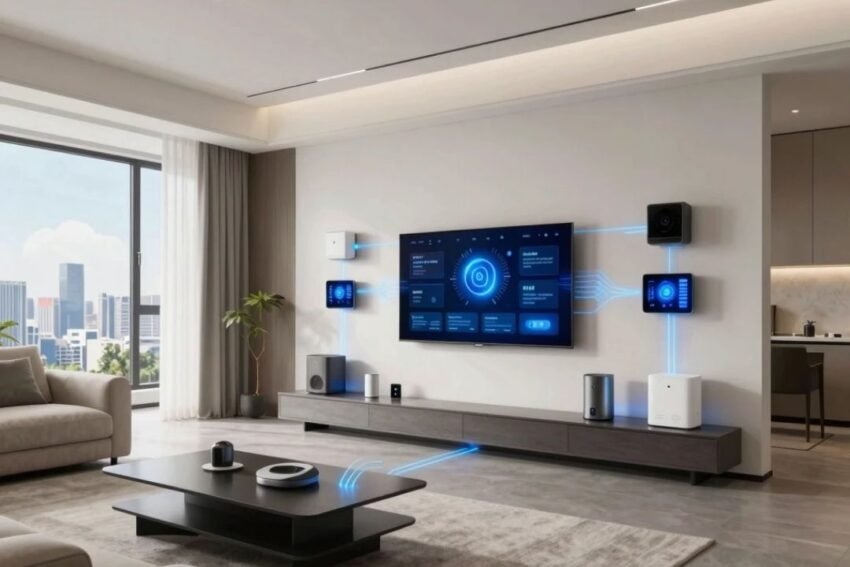
In 2026, the biggest Smart Home & IoT trends are centered around artificial intelligence, automation, interoperability, energy efficiency, privacy, security, and smarter connectivity. Instead of simply controlling individual devices through smartphone apps, modern smart homes are moving toward ecosystems where multiple devices can communicate and respond to changing conditions.
This article explores the top Smart Home and IoT trends in 2026, their benefits, challenges, practical applications, and the technologies shaping the future of connected living.
What Is Smart Home & IoT Technology?
A smart home uses connected devices and automation technologies to monitor, control, and manage different aspects of a home.
The Internet of Things (IoT) connects physical devices to networks so they can exchange data and respond to commands or conditions.
Common smart-home devices include:
- Smart lights
- Smart thermostats
- Smart locks
- Security cameras
- Video doorbells
- Smart speakers
- Smart appliances
- Motion sensors
- Water-leak sensors
- Smart plugs
- Energy monitors
When these devices work together, they can create an automated smart-home ecosystem.
Top Smart Home & IoT Trends in 2026
1. AI-Powered Smart Homes
Artificial intelligence is one of the biggest trends influencing smart-home technology.
Traditional smart homes often rely on simple rules. For example, a light may turn on when motion is detected.
AI can make automation more adaptive by analyzing information from multiple devices and recognizing patterns.
Potential applications include:
- Personalized routines
- Energy optimization
- Security monitoring
- Temperature management
- Automated lighting
- Smart appliance control
The goal is to make the home more responsive without requiring constant manual commands.
2. Generative AI for Smart Home Control
Generative AI and conversational interfaces are creating new ways to interact with connected devices.
Instead of remembering specific commands, users may be able to describe what they want in natural language.
For example, a user could request a comfortable evening environment, and compatible systems could coordinate lighting, temperature, and entertainment settings.
This approach could make smart-home technology easier for less technical users.
3. Predictive Home Automation
Predictive automation goes beyond responding to commands.
Smart systems can potentially identify recurring patterns and adjust compatible devices accordingly.
For example, a system could recognize regular occupancy patterns and automatically manage lighting or temperature.
Predictive automation can make smart homes feel more natural because fewer manual instructions are required.
4. Smarter Security Systems
Home security is one of the strongest applications of IoT.
Modern connected security systems can include:
- Cameras
- Doorbells
- Smart locks
- Motion sensors
- Window sensors
- Alarm systems
AI-assisted systems can help analyze activity and provide more relevant notifications.
For example, a system may distinguish between ordinary movement and specific types of detected activity, depending on its capabilities.
5. AI-Powered Security Cameras
Smart cameras are becoming more intelligent.
Depending on the system, AI can assist with recognizing patterns in camera footage and reducing unnecessary notifications.
Important features can include:
- Motion detection
- Activity alerts
- Night vision
- Two-way audio
- Local storage
- Cloud storage
Privacy should remain an important consideration when installing cameras inside or around a home.
6. Smart Locks and Digital Access
Smart locks provide connected methods of controlling home access.
Depending on the device, users may be able to use:
- PIN codes
- Smartphones
- Digital credentials
- Biometrics
- Traditional keys
Some systems can also support temporary access for guests or service providers.
7. Matter and Better Device Compatibility
Smart-home compatibility has historically been a challenge.
Different manufacturers have used different ecosystems and communication technologies.
The Matter standard is designed to improve interoperability among supported smart-home products.
Greater compatibility can make it easier for consumers to build ecosystems without being restricted to a single manufacturer.
8. Thread-Based Connectivity
Thread is becoming an important networking technology for supported smart-home devices.
It is designed for low-power connected devices and uses mesh networking.
Potential applications include:
- Smart sensors
- Lights
- Locks
- Thermostats
- Other low-power devices
Thread can help create reliable local connections among compatible devices.
9. Edge Computing
Edge computing processes data closer to the device rather than sending every task to a remote cloud server.
For smart homes, edge processing can provide several potential benefits:
- Faster responses
- Lower latency
- Reduced cloud dependence
- Improved local operation
- Potential privacy advantages
Local processing can be particularly useful for time-sensitive automation and device interactions.
10. Smart Energy Management
Energy management is becoming a major Smart Home & IoT trend.
Connected systems can help homeowners monitor electricity consumption and understand where energy is being used.
Smart energy systems can track:
- Appliance usage
- Heating and cooling
- Lighting
- Peak consumption
- Overall electricity patterns
Better visibility can help households make more informed energy decisions.
11. Smart Thermostats
Smart thermostats remain among the most practical IoT devices.
They can provide:
- Remote temperature control
- Scheduling
- Occupancy-based adjustments
- Energy monitoring
- Automated temperature management
AI and sensor integration may make future systems more adaptive.
12. Smart Solar and Home Batteries
IoT can connect household energy systems with solar panels and battery storage.
A connected energy ecosystem can provide information about:
- Solar generation
- Battery status
- Household consumption
- Energy flows
This can help homeowners understand how their home produces, stores, and consumes energy.
13. Smart Lighting Automation
Smart lighting continues to be a popular entry point for home automation.
Connected lighting can support:
- Scheduling
- Dimming
- Motion detection
- Remote control
- Voice commands
- Automated scenes
Users can create routines for mornings, evenings, entertainment, or security.
14. Smart Appliances
Connected appliances are becoming increasingly sophisticated.
Examples include:
- Refrigerators
- Ovens
- Washing machines
- Dishwashers
- Coffee makers
Depending on the product, users can monitor status, receive notifications, and control certain functions remotely.
15. Smart Water Management
Water-management IoT systems can help detect leaks and monitor usage.
Connected leak sensors can alert homeowners when unusual moisture or water activity is detected.
Smart irrigation systems can also use schedules and environmental information to manage outdoor watering.
Potential benefits include:
- Early leak detection
- Reduced water waste
- Automated irrigation
- Remote monitoring
16. Indoor Air Quality Monitoring
Indoor environmental monitoring is another growing smart-home application.
Connected sensors can measure factors such as:
- Temperature
- Humidity
- Carbon dioxide
- Particulate matter
- Other air-quality indicators
Smart systems can provide alerts when conditions change.
17. Voice and Conversational Interfaces
Voice control remains an important way to interact with smart homes.
Instead of opening multiple apps, users can control compatible devices using voice commands.
Future conversational systems may make interactions more natural by understanding context and multi-step requests.
18. Smart Displays
Smart displays can act as central interfaces for compatible devices.
They can provide access to:
- Cameras
- Doorbells
- Lights
- Thermostats
- Timers
- Entertainment
- Household information
A central interface can make it easier to manage multiple connected products.
19. Automated Entertainment
Smart-home technology is increasingly connected to entertainment.
Compatible systems can coordinate:
- TVs
- Speakers
- Streaming devices
- Lighting
- Gaming systems
A single routine can potentially activate multiple devices for activities such as watching movies or playing games.
20. Smart Home Robotics
Robotics is becoming an interesting area within connected-home technology.
Robotic devices can assist with tasks such as:
- Floor cleaning
- Lawn maintenance
- Home monitoring
- Certain household routines
As AI and robotics improve, home robots may become more capable and adaptable.
21. Smart Home Health and Wellness Technology
Connected home technology can also support wellness-oriented environments.
Examples can include:
- Sleep-related devices
- Environmental sensors
- Connected fitness equipment
- Air-quality monitors
- Smart lighting
These systems can help users monitor environmental conditions and build personalized routines.
22. Personalized Smart Home Experiences
AI can potentially create different environments based on user preferences.
A smart home could adjust compatible devices for:
- Work
- Relaxation
- Exercise
- Entertainment
- Sleep
Personalization can make automation more useful while reducing repetitive manual control.
23. Smart Home Automation Routines
Automation routines allow several devices to respond to one event.
For example:
Leaving Home Routine
- Turn off compatible lights
- Adjust thermostat
- Lock compatible doors
- Activate selected security devices
Movie Night Routine
- Dim compatible lights
- Adjust compatible entertainment devices
- Set the preferred environment
Automation makes multiple smart devices work as one system.
24. Improved IoT Cybersecurity
As smart-home ecosystems expand, cybersecurity becomes increasingly important.
Security measures can include:
- Strong authentication
- Multi-factor authentication
- Secure communication
- Firmware updates
- Device access controls
Consumers should avoid using default passwords and should keep supported devices updated.
25. Privacy-Focused Smart Homes
Privacy is becoming an increasingly important consideration.
Smart devices can potentially collect information about:
- Movement
- Occupancy
- Voice interactions
- Device usage
- Environmental conditions
Consumers should review privacy policies and understand what information devices collect and where it is processed.
Local processing can sometimes reduce the amount of information sent to cloud services, depending on the product.
26. Smart Home Networking
A reliable network is the foundation of many IoT ecosystems.
Smart homes can contain dozens of connected devices, including sensors and appliances.
Homeowners should consider:
- Wi-Fi coverage
- Network security
- Router performance
- Device compatibility
- Network congestion
A reliable network can improve the overall smart-home experience.
27. Local-First Automation
Some smart-home enthusiasts are increasingly interested in local automation.
Local-first systems aim to keep more processing and device communication inside the home.
Potential benefits include:
- Faster responses
- Reduced internet dependence
- Greater control
- Potential privacy improvements
However, capabilities vary significantly between ecosystems and devices.
28. Sustainable Smart Homes
IoT technology can contribute to more efficient resource management.
Smart systems can help monitor:
- Electricity
- Water
- Heating
- Cooling
- Lighting
Automation can reduce unnecessary operation of connected devices.
Energy-efficient sensors and hardware can also help reduce the power requirements of IoT ecosystems.
29. Smart Home Accessibility
Automation can improve accessibility for some users.
Useful technologies include:
- Voice controls
- Automated lighting
- Smart locks
- Remote device controls
- Custom routines
- Sensors
Reducing the need for physical interaction with individual devices can make certain household tasks easier.
30. Integration of Smart Home Ecosystems
The future is likely to focus less on individual smart products and more on integrated ecosystems.
A truly connected home could coordinate:
- Security
- Energy
- Lighting
- Climate
- Entertainment
- Appliances
The more effectively devices communicate, the more useful automation becomes.
Benefits of Smart Home & IoT Trends
Convenience
Automation can reduce repetitive household tasks.
Energy Management
Smart systems can help users monitor and manage resource consumption.
Security
Connected cameras, locks, sensors, and alarms can provide additional monitoring capabilities.
Comfort
Smart lighting and climate systems can create personalized environments.
Remote Control
Users can monitor and control compatible devices from supported locations.
Accessibility
Voice commands and automation can simplify certain tasks.
Personalization
AI can potentially adapt home environments to user preferences.
Challenges of Smart Home & IoT
Security Risks
Connected devices can create additional cybersecurity concerns if poorly secured.
Privacy
IoT systems may collect detailed information about household activity.
Compatibility
Not every smart device works with every platform.
Cost
Building a comprehensive ecosystem can become expensive.
Technical Complexity
Some advanced systems require configuration and troubleshooting.
Internet Dependence
Certain cloud-based features require reliable internet connectivity.
How to Build a Smart Home in 2026
You do not need to purchase every available IoT device.
Step 1: Choose a Goal
Start with security, lighting, energy, climate, or entertainment.
Step 2: Check Compatibility
Make sure new devices work with your preferred smart-home ecosystem.
Step 3: Start Small
Begin with a few useful devices.
Step 4: Create Automation
Connect devices through routines and compatible triggers.
Step 5: Improve Security
Use strong passwords, multi-factor authentication, secure networking, and software updates.
Step 6: Expand Gradually
Add devices when they provide a clear practical benefit.
Future of Smart Home & IoT
The smart-home industry is likely to become increasingly intelligent and automated.
Future developments may include:
- More capable AI assistants
- Better device interoperability
- Advanced home robotics
- Predictive automation
- Local AI processing
- Smarter energy systems
- Improved cybersecurity
- More efficient IoT hardware
- Better accessibility
The smart home of the future may require less manual interaction because connected systems will increasingly understand context and coordinate with one another.
Frequently Asked Questions
What is the biggest Smart Home trend in 2026?
AI-powered automation is one of the most important trends, alongside interoperability, smart energy management, security, edge computing, and connected home ecosystems.
What is IoT in a smart home?
IoT connects physical household devices to networks so they can communicate, exchange data, and support automation.
Is AI useful in smart homes?
Yes. AI can support personalization, automation, security analysis, energy management, and natural-language device control.
What is Matter?
Matter is an industry standard designed to improve interoperability among supported smart-home devices.
Are smart homes secure?
Smart homes can be secure when devices and networks are properly maintained. Strong passwords, multi-factor authentication, updates, and secure networking are important.
Can smart homes save energy?
Smart thermostats, lighting, energy monitors, and connected appliances can help users monitor and manage energy consumption.
Conclusion
The top Smart Home & IoT trends in 2026 demonstrate how connected technology is moving toward more intelligent, automated, secure, and personalized homes. Artificial intelligence is becoming a central part of this transformation, helping systems recognize patterns, support natural-language interactions, personalize environments, and improve automation.
At the same time, technologies such as Matter, Thread, edge computing, smart sensors, energy-management systems, connected security devices, and advanced home networks are helping create more integrated IoT ecosystems.
Smart homes are also becoming more focused on practical benefits. Energy monitoring can help homeowners understand consumption, smart security systems can provide additional monitoring capabilities, and automated lighting and climate controls can improve convenience.
However, consumers should not overlook security and privacy. Every connected device can potentially introduce another point that needs to be protected. Strong passwords, multi-factor authentication, firmware updates, secure networks, and careful privacy settings are important parts of responsible smart-home ownership.
Looking ahead, the most important development may be the transition from connected devices to intelligent ecosystems. Instead of controlling dozens of separate gadgets, homeowners may increasingly interact with a unified system that coordinates compatible devices based on context and routines.
As AI, IoT connectivity, automation, robotics, energy technology, and cybersecurity continue to advance, smart homes are likely to become more capable and efficient. The result could be a new generation of homes that are not only connected, but genuinely responsive to the people who live in them.