
Introduction
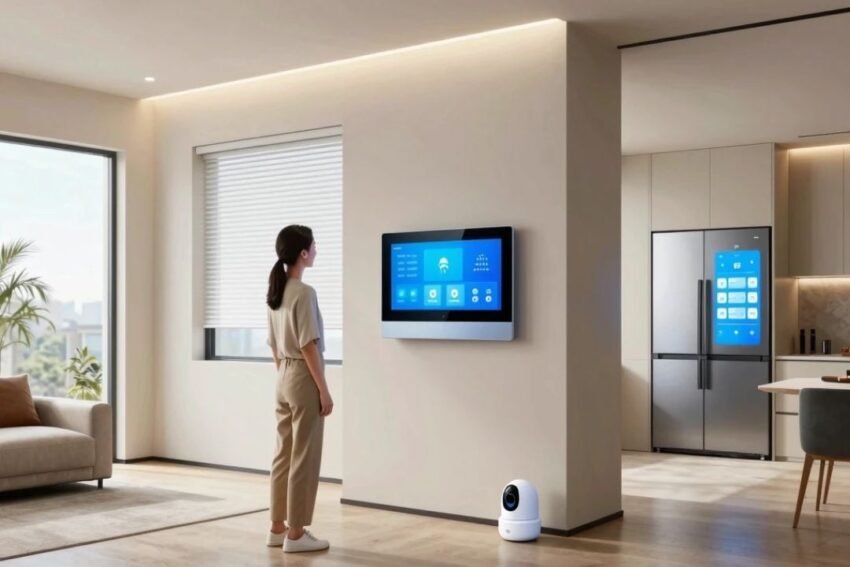
Smart home technology has become an important part of modern living. From intelligent lights and smart thermostats to connected security cameras, doorbells, appliances, and voice assistants, Internet of Things (IoT) devices are changing how people manage their homes.
In 2026, the Smart Home & IoT industry is becoming more advanced through artificial intelligence, automation, improved connectivity, energy management, and stronger security technologies. Smart devices can communicate with each other, collect information, respond to commands, and automate everyday tasks.
The goal of smart home technology is not simply to add more connected devices. It is to create homes that are more convenient, efficient, secure, comfortable, and responsive.
This article explores the latest Smart Home and IoT technologies in 2026, their benefits, popular applications, challenges, security considerations, and future trends.
What Is a Smart Home?
A smart home is a residential environment containing connected devices that can be controlled automatically or remotely.
Smart home devices can communicate through wireless networks and smart-home platforms.
Common examples include:
- Smart lights
- Smart thermostats
- Smart locks
- Smart cameras
- Smart doorbells
- Smart speakers
- Smart appliances
- Smart plugs
- Smart sensors
- Smart entertainment systems
These devices can often be controlled through smartphones, voice commands, schedules, or automated routines.
What Is IoT?
The Internet of Things (IoT) refers to physical devices that connect to networks and exchange data.
IoT devices can include sensors, appliances, vehicles, industrial equipment, and home electronics.
In a smart home, IoT allows different devices to communicate and work together.
For example, a motion sensor could detect activity and trigger smart lights, while a connected security system could send an alert to a smartphone.
How Smart Home Technology Works
A typical smart home ecosystem includes several components.
Smart Devices
These are the connected products installed around the home.
Sensors
Sensors collect information such as:
- Motion
- Temperature
- Humidity
- Light levels
- Door activity
- Air quality
Network Connection
Devices communicate through technologies such as Wi-Fi, Bluetooth, Thread, or other supported connectivity standards.
Smart Home Hub or Platform
A hub or platform can connect and coordinate compatible devices.
Mobile Apps and Voice Control
Users can manage many devices through smartphones, tablets, voice assistants, or smart displays.
Latest Smart Home & IoT Technologies in 2026
1. Artificial Intelligence in Smart Homes
Artificial intelligence is becoming one of the most important technologies in smart homes.
AI can analyze information from connected devices and help automate household routines.
Potential applications include:
- Personalized lighting
- Energy optimization
- Security monitoring
- Smart appliance control
- Predictive maintenance
- Personalized routines
Instead of requiring users to manually control every device, AI can help systems understand patterns and respond automatically.
2. AI-Powered Home Automation
Traditional automation often depends on fixed schedules.
For example, a light might turn on at 7 PM every evening.
AI-powered automation can potentially adapt to changing conditions.
A smart home could learn patterns involving:
- Occupancy
- Temperature
- Lighting
- Energy use
- Daily routines
This can create a more responsive home environment.
3. Smart Lighting
Smart lighting remains one of the easiest ways to start building a smart home.
Smart bulbs and switches can provide:
- Remote control
- Scheduling
- Dimming
- Automated routines
- Voice control
- Motion-based activation
Users can create lighting scenes for different activities, such as working, relaxing, or watching movies.
4. Smart Thermostats
Smart thermostats can help manage indoor temperatures.
They may use sensors, schedules, occupancy information, and connected controls to adjust heating and cooling.
Potential benefits include:
- Improved comfort
- Energy management
- Remote control
- Automated temperature schedules
Smart thermostats can be particularly useful for households trying to manage energy consumption.
5. Smart Security Cameras
Connected security cameras allow homeowners to monitor properties remotely.
Modern systems can offer features such as:
- Motion detection
- Mobile notifications
- Night vision
- Two-way communication
- Cloud or local storage
- Activity monitoring
AI-based detection can help distinguish between different types of activity, depending on the system.
6. Smart Video Doorbells
Smart doorbells combine cameras, microphones, speakers, and internet connectivity.
Users can receive notifications when someone approaches the door and may be able to communicate with visitors remotely.
Some systems can also provide motion detection and activity alerts.
7. Smart Locks
Smart locks can provide alternative ways to control access.
Depending on the model, users may unlock doors through:
- Smartphones
- PIN codes
- Physical keys
- Biometrics
- Digital credentials
Smart locks can also support temporary access for family members, guests, or service providers.
8. Smart Sensors
Sensors are a major component of IoT systems.
Common smart-home sensors include:
- Motion sensors
- Door sensors
- Window sensors
- Water-leak sensors
- Smoke sensors
- Temperature sensors
- Air-quality sensors
Sensors allow smart-home systems to understand what is happening in the environment.
9. Smart Appliances
Connected appliances are becoming increasingly common.
Examples include:
- Smart refrigerators
- Smart ovens
- Smart washing machines
- Smart dishwashers
- Smart coffee makers
Depending on the device, users may be able to monitor or control appliances remotely.
10. Smart Plugs
Smart plugs are a simple way to add connectivity to traditional appliances.
They can provide:
- Remote switching
- Scheduling
- Energy monitoring
- Automation
For example, a smart plug can turn a compatible lamp on and off according to a schedule.
11. Smart Energy Management
Energy management is becoming an increasingly important smart-home application.
Connected systems can monitor electricity consumption and provide information about usage patterns.
Smart energy systems can help homeowners identify:
- High-energy appliances
- Usage patterns
- Peak consumption
- Potential energy savings
12. Smart Solar and Battery Integration
Homes with solar panels and battery storage can potentially connect energy systems with smart-home platforms.
This can help users monitor:
- Solar production
- Battery levels
- Household consumption
- Energy flows
Advanced systems may use automation to coordinate energy use with available supply.
13. Smart Air Quality Monitoring
Indoor air quality can affect comfort and the overall home environment.
IoT sensors can monitor factors such as:
- Temperature
- Humidity
- Carbon dioxide
- Particulate matter
- Other air-quality indicators
Connected systems can notify users when conditions change.
14. Smart Water Management
IoT technology can also improve water management.
Connected leak sensors can identify unusual water activity and send alerts.
Smart irrigation systems can also use sensors and schedules to manage outdoor watering.
Potential benefits include:
- Reduced water waste
- Early leak detection
- Automated irrigation
- Remote monitoring
15. Smart Home Entertainment
Entertainment systems are another major smart-home category.
Connected televisions, speakers, streaming devices, and lighting systems can work together to create automated entertainment environments.
For example, a movie-night routine could adjust lighting, activate compatible devices, and set the preferred entertainment environment.
16. Voice-Controlled Smart Homes
Voice control remains a convenient way to interact with connected devices.
Users can issue commands for compatible systems such as:
- Lights
- Thermostats
- Music
- Timers
- Appliances
- Smart displays
Voice control can also improve accessibility for some users.
17. Matter and Smart Home Interoperability
Interoperability is an important issue in smart-home technology.
Different manufacturers have historically used different platforms and communication systems.
Industry efforts such as Matter are designed to improve compatibility among supported smart-home devices.
Better interoperability can make it easier for consumers to combine products from different manufacturers.
18. Thread-Based Smart Home Connectivity
Thread is a low-power wireless networking technology designed for connected devices.
It can support smart-home devices such as:
- Sensors
- Lights
- Locks
- Thermostats
Its mesh networking approach can help connected devices communicate throughout a home.
19. Edge Computing
Edge computing processes information closer to where it is generated instead of sending everything to a distant cloud server.
In smart homes, edge processing can potentially provide:
- Faster responses
- Reduced cloud dependence
- Improved privacy
- More reliable local automation
This can be particularly useful for time-sensitive smart-home tasks.
20. Predictive Smart Home Systems
Future IoT systems may become more predictive.
Instead of simply responding to commands, smart-home systems can potentially anticipate needs based on patterns.
For example, a system might recognize regular occupancy patterns and adjust compatible devices automatically.
Benefits of Smart Home & IoT Technology
Convenience
Smart devices can automate repetitive household tasks.
Users can control compatible devices remotely or through automated routines.
Energy Efficiency
Smart thermostats, lighting, energy monitors, and connected appliances can help users understand and manage energy consumption.
Security
Connected cameras, locks, sensors, and doorbells can provide additional monitoring capabilities.
Comfort
Automated temperature, lighting, and entertainment systems can create more personalized environments.
Accessibility
Voice controls, automation, and connected devices can make certain household tasks easier for people with different needs.
Remote Monitoring
IoT devices can allow users to check aspects of their homes while away.
Smart Home Security Challenges
The benefits of IoT also come with security risks.
Connected devices can potentially be targeted by attackers if they are poorly secured.
Important risks include:
- Weak passwords
- Outdated software
- Unsecured networks
- Account compromise
- Privacy concerns
- Vulnerable devices
Because smart-home devices can collect information about household activity, security and privacy should be considered when selecting connected products.
How to Secure a Smart Home
Homeowners can improve IoT security by following several practices.
Use Strong Passwords
Avoid simple or reused passwords.
Enable Multi-Factor Authentication
Use multi-factor authentication when supported by the device or service.
Update Firmware
Keep smart-home devices and associated apps updated.
Secure the Wi-Fi Network
Use strong wireless security and a unique network password.
Review Device Permissions
Understand what information each connected device collects and what permissions it requires.
Replace Unsupported Devices
Older products that no longer receive security updates can become a security concern.
Challenges of Smart Home Technology
Compatibility
Not every device works with every smart-home platform.
Cost
Building a large smart-home ecosystem can become expensive.
Setup Complexity
Some systems require technical configuration.
Internet Dependence
Certain cloud-based features require internet connectivity.
Privacy
Smart devices can collect information about household activity.
Security
Poorly secured IoT devices can create cybersecurity risks.
How to Build a Smart Home in 2026
You do not need to purchase dozens of devices at once.
Step 1: Start With One Goal
Choose an area such as:
- Lighting
- Security
- Energy
- Climate
- Entertainment
Step 2: Select a Compatible Platform
Choose a smart-home ecosystem that supports the devices you plan to use.
Step 3: Start With Basic Devices
Smart bulbs, plugs, sensors, or thermostats can be good starting points.
Step 4: Improve Automation
Create routines based on time, occupancy, or sensor activity.
Step 5: Strengthen Security
Use strong passwords, multi-factor authentication, secure Wi-Fi, and regular updates.
Step 6: Expand Gradually
Add devices only when they solve a real problem or provide meaningful value.
Smart Home IoT Use Cases
Smart Morning Routine
A morning routine could coordinate compatible lights, thermostats, and other devices.
Home Security
Sensors, cameras, and smart locks can work together to monitor activity.
Energy Management
Connected thermostats and energy monitors can help identify unnecessary energy consumption.
Entertainment
Lighting, speakers, and compatible entertainment devices can be coordinated for movie or gaming sessions.
Elderly and Accessibility Support
Automation and remote monitoring may help simplify certain household activities.
Future Trends in Smart Home & IoT
More Intelligent AI
AI will likely become more deeply integrated into home automation.
Greater Device Compatibility
Improved interoperability can make it easier to combine products from different manufacturers.
Local Processing
More devices may process information locally to improve speed and privacy.
Smarter Energy Management
IoT systems may increasingly connect homes with solar, batteries, smart appliances, and energy networks.
Predictive Automation
Smart homes may move from simple command-based automation toward systems that anticipate household needs.
Better Security
Manufacturers are likely to place greater emphasis on device security, authentication, software updates, and privacy.
More Sustainable IoT
Energy-efficient sensors and connected systems may help reduce unnecessary electricity and water consumption.
Smart Home & IoT Careers
The growth of connected-home technology is creating opportunities in:
- IoT development
- Software engineering
- AI development
- Cybersecurity
- Network engineering
- Hardware engineering
- Smart-home installation
- Data analytics
- Automation engineering
People interested in this industry can benefit from learning programming, networking, cloud computing, cybersecurity, electronics, and artificial intelligence.
Frequently Asked Questions
What is Smart Home IoT?
Smart Home IoT refers to connected household devices that communicate through networks and can be monitored, controlled, or automated.
What are examples of smart-home devices?
Examples include smart lights, thermostats, cameras, doorbells, locks, sensors, plugs, appliances, speakers, and entertainment systems.
Is smart-home technology worth it?
It can be worthwhile when connected devices solve practical problems such as security monitoring, energy management, convenience, or automation.
Is IoT safe for homes?
IoT can be safe when devices are properly secured and maintained. Strong passwords, multi-factor authentication, secure networks, and software updates are important.
What is Matter in smart homes?
Matter is an industry connectivity standard designed to improve interoperability among supported smart-home devices.
Will AI make smart homes smarter?
AI can help connected systems analyze patterns, personalize automation, improve device interactions, and potentially predict household needs.
Conclusion
The Smart Home & IoT industry in 2026 is moving toward more intelligent, connected, automated, and efficient homes. Artificial intelligence, smart sensors, advanced connectivity, cloud computing, edge processing, energy management, and improved interoperability are helping transform ordinary homes into connected digital environments.
Smart lighting, thermostats, security cameras, doorbells, locks, appliances, sensors, entertainment systems, and energy-management tools are among the most useful IoT applications available to homeowners.
The biggest opportunity is not simply connecting more devices. The real value comes from making those devices work together intelligently. AI-powered automation can help reduce repetitive tasks, while smart energy systems can provide better insight into household consumption. Connected security products can offer additional monitoring, and smart entertainment systems can create more personalized experiences.
However, smart-home technology also creates challenges involving privacy, security, compatibility, cost, and internet dependence. Consumers should choose reputable products, maintain strong account security, update firmware, and understand how their devices collect and use information.
Looking ahead, the future of Smart Home & IoT will likely focus on AI-powered automation, better interoperability, local processing, energy efficiency, predictive systems, stronger security, and more seamless device integration.
As these technologies continue to develop, smart homes are likely to become less about manually controlling individual gadgets and more about creating connected environments that automatically respond to the needs of the people living inside them.